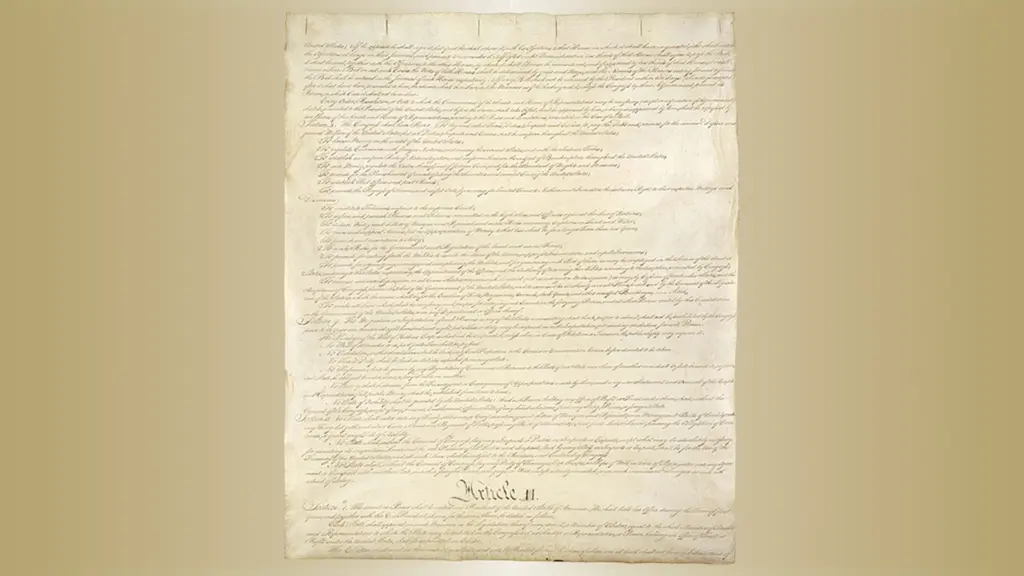
An image of Article II of the United States Constitution
MADURO IN CUSTODY—A CONSTITUTIONAL ACTION BY THE PRESIDENT
INTRODUCTION
Americans on Saturday woke up to the news that Venezuelan “President” Nicolas Maduro and his wife were captured in Caracas and taken to New York to face an indictment that issued from the Southern District of New York in March of 2020. It can be viewed HERE. Biden’s Administration did not recognize Maduro as President yet encouraged his grip on Venezuela by easing sanctions and releasing corrupt associates of Maduro from U.S. prisons. He welcomed unvetted “refugees” that Maduro carefully released here. Biden did not sanction anyone from the regime, and in July of 2024, Idaho U.S. Senator Jim Risch, the ranking member of the Senate Foreign Relations Committee, called on Congress to pass the Venezuela Democracy Act and urged Biden in the last months of his Presidency to seek the arrest and extradition of Maduro and to reimpose sanctions that had been lifted during his Administration. Crickets from Congress and the White House. Fast forward to now.
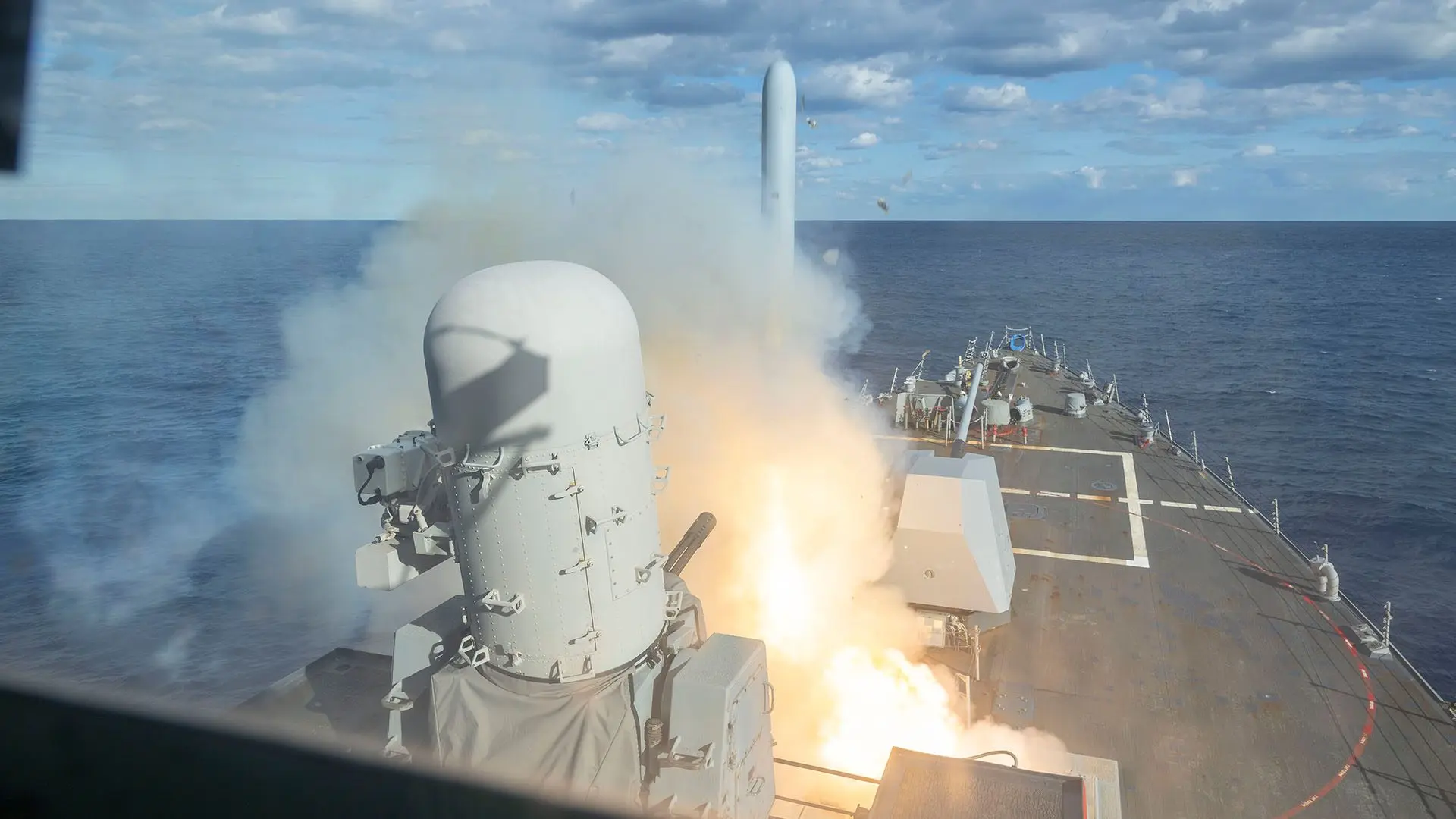
This operation was a massive and precision effort by a combined military and law enforcement force that suppressed any defenses and rapidly descended upon the target. The speed and ferocity of the surprise assault were such that Maduro and his wife were unable to enter their “safe room.” The pendency of this indictment, never meant to be just a piece of paper, along with the resolve of this administration to ensure that the Hemisphere was not a playground for our geopolitical enemies, gave rise to this decision to act. The purpose of this piece is neither to forecast what instabilities might be exploited by China or Russia in funding an insurgency nor to judge the political implications of what might happen in the vacuum of power in Venezuela and for the region writ large. My goal is to simply defend the legality of the action in the first instance as an exercise of plenary power granted to the Executive by clear constitutional design. It may well be that the acting President, Delcy Rodriguez, played the Administration by handing over Maduro and used American power to remove him. Her rhetoric is sounding that way. Now, as de facto President, she is waxing defiant and vowing to protect Venezuelan sovereignty and defend oil reserves. She is the daughter of a Marxist guerilla leader and an avowed socialist and Chavez ally who has had a strong hand in the mismanagement of oil reserves and the collapse of the economy there. Her family is embedded in Venezuela’s government. Secretary of State Marco Rubio has declared her as also illegitimate. Her whereabouts are currently unknown, and the coming days will determine whether we engage in further actions such as blockades and covert operations. Time will tell.
ARTICLE II PLENARY COMMANDER IN CHIEF AUTHORITY IN THE EXECUTIVE HAS CREATED DEBATE AND TENSION BETWEEN THE WAR POWERS RESOLUTION AND PRESIDENTIAL POWER TO ENGAGE IN FOREIGN POLICY AND PROTECT NATIONAL INTERESTS BY FORCE SHORT OF ALL-OUT WAR
President Trump’s reinvigoration of the Monroe Doctrine is clearly stated in the National Security Policy of the United States released in November of this year:
“We want to ensure that the Western Hemisphere remains reasonably stable and well-governed enough to prevent and discourage mass migration to the United States; we want a Hemisphere whose governments cooperate with us against narco-terrorists, cartels, and other transnational criminal organizations; we want a Hemisphere that remains free of hostile foreign incursion or ownership of key assets and that supports critical supply chains; and we want to ensure our continued access to key strategic locations. In other words, we will assert and enforce a ‘Trump Corollary’ to the Monroe Doctrine.”
The foregoing paragraph is a condensed and target-rich mission statement for an energetic Executive determined to create a stable hemisphere and to deter the mass migrations to the United States created by unstable and corrupt regimes like Maduro’s. It is no secret that Chinese and Russian influence, as well as Iranian and Cuban presence in Venezuela, and their support for a criminal regime should alarm us. It was inevitable in the face of Maduro’s failure to surrender to face charges or to flee to a third country that we would act in our national interest.
Previous editions of this blog highlighted the following opinion of the DOJ Office of Legal Counsel during the Obama Administration supporting the authority of any President to commit military forces in the national interest:
“As we explained in 1992, Attorneys General and this Office ‘have concluded that the President has the power to commit United States troops abroad,’ as well as to ‘take military action,’ ‘for the purpose of protecting important national interests,’ even without specific prior authorization from Congress. Authority to Use United States Military Forces in Somalia, 16 Op. O.L.C. 6, 9 (1992) (‘Military Forces in Somalia’). This independent authority of the President, which exists at least insofar as Congress has not specifically restricted it, see Deployment of United States Armed Forces Into Haiti, 18 Op. O.L.C. 173, 176 n.4, 178 (1994) (‘Haiti Deployment I’), derives from the President’s ‘unique responsibility,’ as Commander in Chief and Chief Executive, for ‘foreign and military affairs,’ as well as national security. Sale v. Haitian Centers Council, Inc., 509 U.S. 155, 188 (1993); U.S. Const. art. II, § 1, cl. 1; id. § 2, cl. 2. The Constitution, to be sure, divides authority over the military between the President and Congress, assigning to Congress the authority to ‘declare War,’ ‘raise and support Armies,’ and ‘provide and maintain a Navy,’ as well as general authority over the appropriations on which any military operation necessarily depends. U.S. Const. art. I, § 8, cls. 1, 11–14. Yet, under ‘the historical gloss on the “executive power” vested in Article II of the Constitution,’ the President bears the ‘vast share of responsibility for the conduct of our foreign relations.’”
This “historical gloss” derives from hundreds of instances of use of military force short of full-scale war as far back as Jefferson’s ordering of most of the new American Navy in 1801 to intercept and destroy Barbary Pirates in the Mediterranean Sea. He did not inform Congress until his State of the Union later that year. It has long been urged by commentators that the shared responsibility for the use of military force between Congress and the President sees a formal declaration of war as within the province of Congress but the initiation of limited uses of force short of all-out war as within the Executive’s “Commander in Chief” authority. The Framers, by their writing and comments, knew the distinction and saw a separation of powers wherein Congress provides purse and oversight for the President’s command. A declaration of all-out war is distinct from limited and targeted uses of military force to enhance foreign policy objectives. Professor John Yoo, Heller Professor of Law at the University of California, Berkeley, and an advocate of this “Presidential View,” opined as much in his National Review piece this weekend:
“Not only was the U.S. capture of Nicolás Maduro legal, but it also has significant precedent. The President unilaterally launches a lightning-fast assault to overthrow a foreign dictator who harms Americans, oppresses his own people, and continues to threaten our national security. Critics accuse the president of violating the Constitution’s grant of power to Congress to declare war. That may describe President Donald Trump’s order to execute the astounding snatch-and-grab of Nicolás Maduro, the leader of Venezuela. But it also describes President Barack Obama’s 2011 campaign to bring down the Libyan regime of Moammar Qaddafi. Or President Bill Clinton’s 2000 air war against Serbia, which stopped its invasion of Kosovo and led to the overthrow and trial of Slobodan Milošević. Or, in the example most similar to today’s, President George H. W. Bush’s 1989 decision to invade Panama, arrest its military leader Manuel Noriega, and try him for drug trafficking.”
Professor Yoo explains his “Presidential View“ of war powers further:
“In the initial burst of state constitution-making, the revolutionaries rejected the British monarchy and experimented with weakening the executive branch. But when the Framers wrote the Constitution eleven years later, they restored an independent, unified chief executive with its own powers, including the authority to wage war as commander in chief and chief executive. In Federalist No. 74, Alexander Hamilton explained that “the direction of war implies the direction of the common strength,” and that the authority to direct and employ this strength is a fundamental aspect of the executive power. The president should lead in wartime because, in Hamilton’s words, he can act with “decision, activity, secrecy, and dispatch.” He emphasized that “energy in the executive is a leading characteristic of good government” and is essential for protecting the community against foreign threats.”
The recent action in Venezuela to bring Maduro to justice has been analogized by Professor Yoo to the Panama invasion at President Bush’s order. There was no action by Congress to authorize that action, and it acquiesced as it has for centuries. Hundreds of presidential actions in initiating military action have occurred with but a handful of Authorizations for the Use of Military Force and formal declarations of war from Congress. The similarities come to the fore in the Joint Chief’s After-Action report on Operation Just Cause:
“In l988, as relations with Panama deteriorated, the commander of U.S. Southern Command (SOUTHCOM), General Frederick F. Woerner, Jr., U.S. Army, had developed a strategy which gradually increased the strength of U.S. forces in Panama to deter the dictator, General Manuel Noriega, from attacking U.S. citizens or interfering with the Panama Canal. If deterrence failed, Woerner planned to bring in additional forces from the United States over a three-week period before taking action against Noriega. But after Noriega overturned the results of the Panamanian election of May 1989, President Bush lost patience with General Woerner’s approach and replaced him with General Maxwell R. Thurman, U.S. Army. Aggressive by nature, Thurman modified the BLUE SPOON plan to accommodate a major shift in the strategy for dealing with Noriega. BLUE SPOON called for a joint offensive operation to defeat and dismantle the Panama Defense Force while protecting U.S. lives, U.S. property, and the Canal. As conceived by General Woerner and his staff, BLUE SPOON would begin with operations lasting up to eight days, conducted by the nearly twelve thousand troops already in Panama, who would then be joined, over a two-week period, by approximately ten thousand troops from the United States. Accelerating the buildup of U.S. forces in Panama, Thurman also shortened the timetable for the deployment of additional forces from the U.S. to three days. Hoping to take Noriega by surprise, General Thurman intended to overwhelm the dictator’s forces before they could organize effective resistance or take U.S. citizens hostage. In late 1989 relations with Panama grew sharply worse. On 15 December 1989, the National Assembly passed a resolution that a state of war existed with the United States, and Noriega named himself the Maximum Leader. Violence followed the next evening when a Panamanian soldier shot three American officers; one, First Lieutenant Robert Paz, U.S. Marine Corps, died of his wounds. Witnesses to the incident, a U.S. naval officer and his wife, were assaulted by Panamanian Defense Force (PDF) soldiers while in police custody. On 17 December, after a review of these events and a briefing on BLUE SPOON, President Bush decided to act. Operation JUST CAUSE began shortly before 0100 on 20 December with special operations forces attacking key installations in Panama. In the early hours of 20 December, conventional task forces seized additional key points and the land approaches to Panama City. Task Force BAYONET then entered the city, secured the U.S. embassy, and captured the PDF headquarters, La Comandancia, after a three-hour fight. With the Comandancia in U.S. hands and Noriega in hiding, centralized control of the PDF collapsed. However, fighting would flare sporadically for some time as U.S. forces overcame pockets of resistance.”
No Congressional action. Noriega was jailed and convicted, and the national interest in the Canal Zone was protected. Trump has strong historic and legal cover for his action against Maduro in seeing that he is tried and in so doing to dilute foreign destabilizing influence in our Hemisphere.
The War Powers Resolution of 1973 was passed over President Nixon’s veto, and it was in response to Nixon’s prosecution of the Vietnam War by introducing American forces into Laos and Cambodia to bomb and destroy supply lines exploited by the enemy. This knee-jerk reaction to this unpopular war, which appears HERE, usurps the authority of the President as the sole executive power in command of the armed forces as well as the branch responsible for the prosecution of American foreign policy and the protector of the national interest. The swiftness, secrecy, and boldness which are necessary to the prosecution of such actions are the reason that Presidents of both parties have pushed back against its unconstitutional constraints and introduced U.S. forces into hostilities to protect national interests, whether or not Congress so authorized the action. Consult with Ilhan Omar? Schiff and Swalwell? Congress’s sole authority to “Declare War” is not inconsistent with a President’s Article II authority to direct military forces in the national interest. Such actions are political in nature and unreviewable by the courts. Such actions are subject to political accountability, fiscal oversight, and impeachment. American presidents will continue to exercise their plenary authority with its long historical gloss notwithstanding the War Powers Resolution.
CONCLUSION
This action may strengthen our hand in our Hemisphere, or it may provide an opportunity for Russia, China, North Korea, and Iran to fund an insurgency and provide logistic support in an attempt to frustrate our aims in the region. Trump can respond by blockades and covert action, but true debate awaits in Congress and among the American public. Displaced Venezuelans around the world want to return home to a country that recaptures the prosperity of the past. Enabling a narco-kingpin to stay in power is and was a non-starter.
It will be interesting to see whether a jury of New York Mamdani voters convicts Maduro or not. His arraignment is this week. Pass the popcorn.
Mike Imprevento
January 6th, 2026